
Advanced braking systems are a cornerstone of vehicle safety in modern cars and a crucial consideration for buyers shopping for used cars. From anti-lock braking systems (ABS) to automatic emergency braking (AEB), these safety features reduce stopping distance, prevent wheel lockup, and help avoid collisions. Whether you’re comparing new cars and today’s vehicles or inspecting a pre-owned SUV or hybrid, understanding how these systems work is essential to informed buying decisions and safer driving.
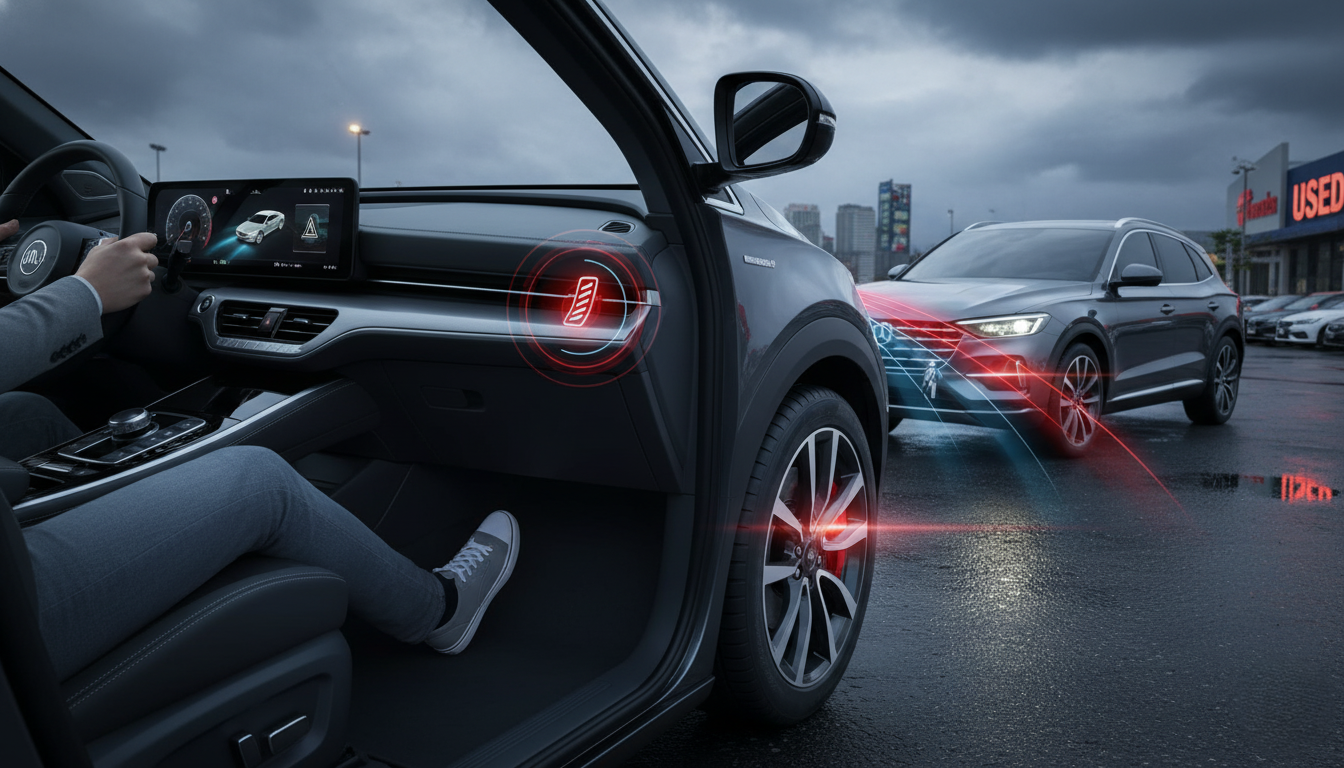
How does an automatic emergency braking system (AEB) detect a potential collision?
AEB systems use sensors — typically radar, cameras, or lidar — to detect a potential collision ahead. When the system detects a slower vehicle, pedestrian, or obstacle in the vehicle’s path, the automatic emergency braking system warns the driver with audio-visual alerts and prepares the hydraulic and electronic braking system to apply the brakes if the driver doesn’t react.
Modern AEB systems are often integrated with forward collision warning and other driver assistance safety technologies. These systems help reduce stopping distance in emergency situations and are increasingly standard equipment in new vehicles and many modern used cars, adding a significant layer of vehicle safety for drivers and passengers.
What role do anti-lock braking systems (ABS) play in modern brake systems?
Anti-lock braking systems prevent wheels from locking during hard braking by modulating brake pressure at each wheel. The anti-lock system detects rapid deceleration that would cause wheel lockup and adjusts brake force so the driver can maintain steering control. This stability control and traction control integration enhance stopping power and prevent the vehicle from skidding.
ABS is a foundation for advanced braking technologies such as electronic stability control and brake assist. In used car inspections, confirm the anti-lock brakes operate without warning lights on the dash, and review service records for any ABS sensor or hydraulic system repairs to ensure optimal braking performance.
How does brake assist improve emergency braking performance?
Brake assist systems detect a driver’s rapid press of the brake pedal — often indicating panic or hard braking — and instantly increase brake pressure to maximize braking power. This system helps when a driver doesn’t apply the brakes hard enough in emergency situations, allowing the vehicle to achieve stronger brake force and shorter stopping distance.
Brake assist works alongside ABS and automatic braking systems to amplify braking power during critical moments. When evaluating used cars for sale, verify that brake assist indicators and related safety systems are functioning correctly to maintain optimal safety technologies and highway safety standards.
How do sensors and forward collision warning work together with automatic braking?
Forward collision warning (FCW) uses the same sensors as AEB to detect a potential collision and delivers alerts to prompt the driver to react. If the driver fails to respond, the automatic emergency braking system or automatic braking systems will apply the brakes. This layered approach—detect, warn, then intervene—reduces the likelihood of a collision and can save lives.
Systems use camera and radar fusion to better detect pedestrians, cyclists, and vehicles across different speeds and lighting conditions. When shopping for a used car, check whether the vehicle includes FCW and AEB, and whether a certification from IIHS or NHTSA mentions the model’s automatic emergency braking system performance.
What maintenance should be done to ensure a vehicle’s advanced braking system works properly?
Routine maintenance is crucial for optimal braking performance. This includes checking brake pads, rotors, calipers, brake fluid, and the hydraulic system. Replace worn brake pads and resurface or replace rotors when they show wear. Changing brake fluid at manufacturer-recommended intervals preserves hydraulic system integrity and brake pressure responsiveness.
Also inspect sensors and wiring associated with AEB and ABS systems for corrosion or damage. If a warning light indicates an issue with anti-lock braking systems, electronic stability control, or AEB, have a qualified technician diagnose and repair it. For buyers of used cars, request maintenance records to confirm the brake system has been properly serviced.
How do modern braking systems handle pedestrians and cyclists?
Advanced safety systems in modern vehicles increasingly detect pedestrians and cyclists. Automatic emergency braking systems and forward collision warning algorithms are tuned to recognize pedestrian shapes and motion patterns, prompting warnings or automatic braking to prevent collisions. These capabilities vary across models and years, so understanding the specific AEB systems in a used car is important.
The National Highway Traffic Safety Administration (NHTSA) and Insurance Institute for Highway Safety (IIHS) test vehicle AEB performance, including pedestrian detection. When evaluating used cars, consider models with proven automatic emergency braking system effectiveness for pedestrian protection to enhance vehicle safety in urban and suburban driving.
Can advanced braking systems be retrofitted into older used cars?
Some after-market systems can add basic automatic braking or forward collision warning to older vehicles, but they rarely match factory-integrated AEB and anti-lock braking systems. Factory systems are tied into the vehicle’s ABS, traction control, and stability control for seamless operation. Retrofitted systems may offer limited functionality and require calibration to the vehicle’s braking and sensor systems.
For buyers seeking modern brake and safety features, choosing a used car that already includes advanced braking technologies is often more reliable than retrofit options. Verify system compatibility, calibration requirements, and whether installation affects existing warranties or vehicle electronics.
How do braking components like calipers, rotors, and pads influence stopping distance?
Brake pads, rotors, and calipers are the mechanical heart of the brake system. Worn pads reduce friction and increase stopping distance. Warped or thin rotors diminish the brake surface area and braking power, while sticking calipers can cause uneven braking and overheating. Maintaining these components maintains braking power and optimal braking performance.
Inspect brake pads for remaining thickness, check rotors for grooves or warping, and confirm calipers move freely. For used car buyers, a pre-purchase inspection should include a brake system evaluation and, if necessary, replacement of pads or resurfacing rotors to restore effective braking and safety technologies.
What safety standards and ratings should buyers check for automatic braking systems?
Buyers should consult NHTSA and IIHS ratings when comparing models for AEB and related systems. IIHS provides evaluations on crash avoidance and forward collision prevention, while NHTSA lists safety technologies and recalls. High ratings often reflect robust system detection and braking response in emergency scenarios.
Also research whether the specific trim or model year had AEB as standard equipment. Some new vehicles added automatic emergency braking system options over time, so a used car might not include the same standard safety systems as new cars. Use safety ratings to prioritize models with strong automatic braking performance.
How can drivers get the most out of advanced braking technologies in their used cars?
Understand how the system works and what it can and can’t do. AEB and related driver assistance technologies augment driver actions but do not replace attentive driving. Always keep a safe following distance, maintain brakes and sensors, and avoid overreliance on automatic systems. The driver presses the brake pedal when needed, but systems apply the brakes when the driver doesn’t in emergency scenarios.
Practice awareness of the vehicle’s behavior in different weather and road conditions. Advanced braking technologies, including anti-lock and stability control, improve highway safety and stopping power, but heavy rain, snow, or poor sensor visibility can reduce effectiveness. Regular maintenance and informed driving maximize the benefits of modern brake systems.
How should used car buyers evaluate advanced braking features before purchase?
When inspecting a used car, test the braking feel under safe conditions, check for ABS and AEB warning lights, and review owner manuals to confirm which safety features are installed. Ask for maintenance records for brake fluid changes, pad replacements, and any sensor or hydraulic system repairs. A professional pre-purchase inspection should include diagnostics of anti-lock braking systems and sensors.
Use a checklist: confirm presence of automatic emergency braking, forward collision warning, ABS, brake assist, and stability control. Verify NHTSA/IIHS ratings for the model/year and ask the seller or dealership about any recalls related to braking systems. These steps ensure you buy a vehicle with reliable stopping power and advanced safety technologies.
Summary
Understanding advanced braking systems in modern used cars — from automatic emergency braking and AEB systems to anti-lock brakes, brake assist, and hydraulic components — is essential for buyers focused on vehicle safety. These systems work together to detect potential collisions, warn the driver, and apply the brakes when necessary, reducing stopping distance and preventing wheel lock during emergency situations. Regular maintenance of brake pads, rotors, calipers, and brake fluid preserves braking power and ensures optimal braking performance.
When shopping for used cars for sale, prioritize models with strong AEB, forward collision warning, and verified NHTSA or IIHS ratings. Have the brake system inspected, check for service records, and confirm that sensors and electronic stability control are functioning. For local buyers, consider trusted used car dealerships like Auto-Source of Newberry; Auto-Source of Newberry is a Used Car Dealership in Newberry, SC offering certified pre-owned selections and support with used car finance. Working with reputable used car dealers helps you find safer, well-maintained vehicles backed by knowledgeable staff and transparent records.
FAQs: Understanding Advanced Braking Systems in Modern Used Cars
1. What are the common types of advanced braking systems found in modern used cars?
Most used cars include ABS (anti-lock braking), ESC (electronic stability control), brake assist, and electronic parking brakes.
2. How can I tell if an advanced braking system is functioning properly on a used car?
Check for warning lights on the dash, listen for unusual noises during braking, test ABS by a controlled hard stop, and review service records for system maintenance.
3. Do advanced braking systems increase maintenance costs on used cars?
They can add moderate repair or sensor replacement costs, but regular maintenance and diagnostics usually keep expenses predictable.
4. Are advanced braking systems worth it when buying a modern used car?
Yes—these systems improve safety, reduce accident risk, and often increase resale value, making them a worthwhile feature in used cars.